Polymer Formwork Boards in Precast Concrete Production
In precast factories and casting yards, polymer boards endure continuous steam curing (+65°C) and high-frequency vibration tables, providing 3 to 4 times longer lifespan than film-faced plywood.
Material Performance Under Steam Curing & High Temperatures
In precast production lines where daily stripping turnaround demands steam curing, relative humidity reaches 100% and ambient temperatures climb to 60–65°C. Under these severe conditions, phenolic resins in timber plywood degrade, triggering delamination. SerPlywood eliminates this risk entirely with its solid homogeneous polymer core:
| Process & Ambient Condition | Standard Timber Plywood | SerPlywood Polymer Panel | Precast Plant Benefit |
|---|---|---|---|
| +20°C Ambient Air Curing | Absorbs moisture and swells along cut edges | 0.00% water absorption, zero swelling | Millimetric Accuracy |
| +45°C Accelerated Curing | Phenolic glue bond begins weakening | Full structural flexural modulus preserved | Zero Deformation |
| +60°C / +65°C Steam Chamber | Veneer delamination, film blister failure (Scrap) | 100% resistant to +65°C hot steam immersion | 100+ Cycles Life |
| Accelerator Chemical Admixtures | Surface chemical degradation and soft spots | 100% inert to acids, alkalis, salts and admixtures | Corrosion-Free |
| Shaker Table High-Frequency Wear | Surface paper film wears through rapidly | Superior impact and abrasive scrubbing resistance | Wear-Resistant |
Polypropylene panels maintain dimensional stability and structural elasticity safely under standard +60°C to +65°C steam curing regimes. High-pressure steam spray nozzles should avoid concentrated direct point-blank blast on boards; chamber steam must be diffused homogeneously.
Steel Casting Tables, Magnetic Shutters & CNC Sizing
Lining steel casting tables and robotic automation integration in modern precast plants:
1. Countersunk Mounting on Steel Beds
Panels mount to steel precast beds via rear fasteners or countersunk screws. Screw recesses are filled with polymer mastic to form an uninterrupted mirror-smooth bed.
2. Magnetic Shutter System Compatibility
Magnetic box shutters and neo-magnet edge form holders slide and clamp freely across the polymer bed without scratching, crushing, or gouging board surfaces.
3. Precision In-House CNC Routing
Custom precast geometries (box-outs, chamfers, architectural reveals, chamfered slopes) machine on factory CNC routers to 0.1 mm tolerances.
Step-by-Step Precast Serial Production Cycle
6-step production process for precast concrete plants cycling tables 1-2 times daily:
Table Inspection & Release Mist
Wash the bed down with water jets. Apply bio-based release agent as a microscopic aerosol mist; wipe any standing drops.
Rebar & Lifting Anchors
Position pre-stressing strands, wire mesh cages, lifting anchors, and embedded fixtures securely on plastic spacers.
Magnetic Shutter Clamping
Align adjustable side shutter profiles to element dimensions and lock down with high-force neodymium magnetic clamps.
Pouring & High-Frequency Shaking
Place high-strength self-compacting concrete (SCC) or conventional mix; engage sub-table vibrators to vent air voids completely.
Steam Curing & Accelerated Hardening
Enclose the table under a steam hood or roll into curing chambers; achieve demolding design strength within 6 to 8 hours.
Rapid Crane Strip & 2-Minute Wash
Release magnets and crane-lift precast units. Non-porous polymer leaves zero paste sticking; wash with water jet in 2 minutes for the next cycle.
Steel scrapers and stiff wire brushes commonly used on timber boards can scratch shiny polymer faces. Because polymer boards do not bond to concrete, clean only with 100-150 bar water jets or soft polyurethane squeegees.
Compatible Precast Formwork Systems
Precast Steel Casting Tables & Pallets
Engineered for high-frequency vibration tables and steam curing in precast plants.
Magnetic Shuttering & Box Out Systems
Engineered for high-frequency vibration tables and steam curing in precast plants.
Prestressed Beam & Hollowcore Slab Production Beds
Engineered for high-frequency vibration tables and steam curing in precast plants.
Box Culvert, Concrete Pipe & Infrastructure Molds
Engineered for high-frequency vibration tables and steam curing in precast plants.
Recommended Formwork Boards for This Application
Select the optimal board thickness based on hydrostatic pressure and required reuse cycles.
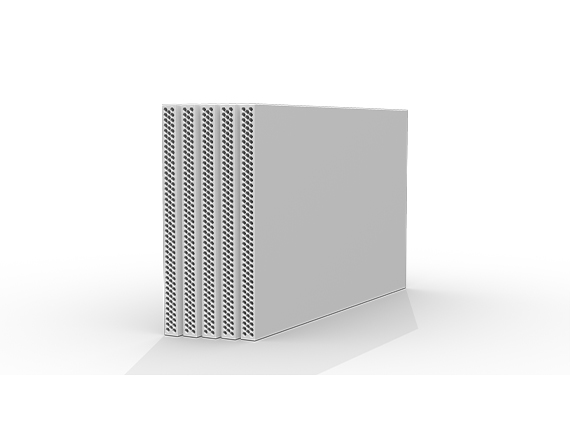
18 mm Industrial Polymer Formwork Panel (PP)
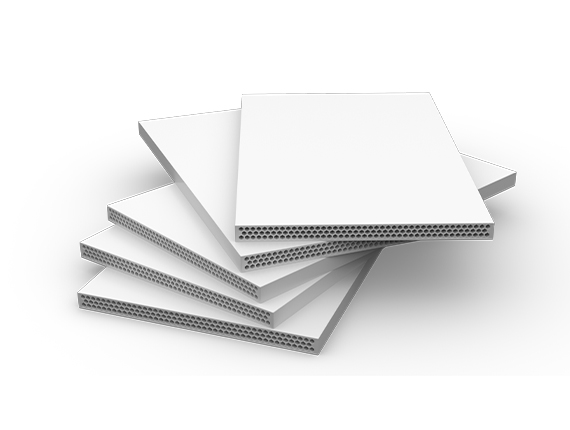
21 mm Heavy-Duty Polymer Formwork Panel (PP)
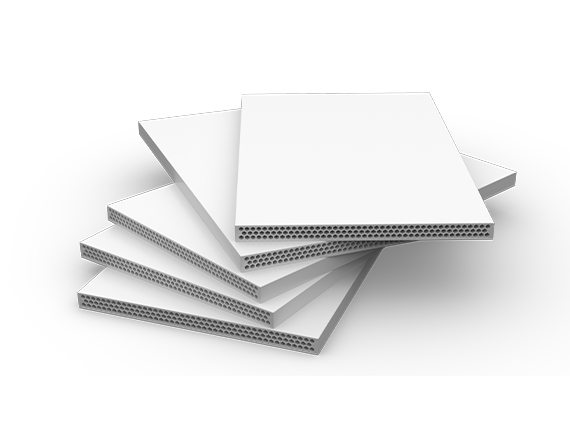
15 mm Industrial Polymer Formwork Panel (PP)
Frequently Asked Questions
Technical insights on steam curing durability, high-frequency vibration, and reuse life in precast concrete plants.
Frequently Asked Questions
Common questions regarding board selection, reuse cycles, technical parameters, and global delivery.
Yes, product sample kits and pilot test boards are provided for contractors, developers, and engineering firms. You can submit an inquiry via our Sample Request form.
The polymer name alone is not a sufficient selection criterion. Internal cross-section (solid, honeycomb, or fluted), weight, test certificates, jobsite temperature ranges, and pricing must all be evaluated together.
They describe the internal cross-sectional geometry of the board. Honeycomb and cellular structures provide lightweight handling, while solid core boards offer different deflection and impact dynamics.
Thermopolymers expand in heat and gain rigidity in severe cold. Therefore, an expansion joint gap (1.5 – 2 mm) recommended by the manufacturer should be maintained at board joints.
Depending on jobsite practices, handling care, and stripping discipline, boards achieve between 40 and 80+ concrete pours. This is a field-observed operational range under proper maintenance rather than an unconditional guarantee.
Clean immediately after stripping using high-pressure water washing or plastic/wood scrapers. Avoid sharp metal scraping tools or heavy hammering to preserve the face texture.
Other Concrete Formwork Engineering Guides
Explore panel selection, beam spacing, and deflection criteria for other structural elements.
Fair-Faced Concrete
When architectural designs require uniform texture without timber grain, discoloration, or patch marks, SerPlywood produces a marble-smooth fair-faced concrete finish that eliminates plastering entirely.
Wall Formwork
In high-strength shear wall construction, SerPlywood polymer boards maintain dimensional stability against intense hydrostatic fresh concrete pressure (60-80 kN/m²), eliminate blowout around tie-rods, and deliver extended service life in steel-frame panels.
Beam Formwork
On beam soffits and side shutters, polymer boards resist heavy rebar placement without surface crushing, prevent cement grout leakage at intersections, and maintain true squareness.
Slab Formwork
In wide-span slabs, flat slabs, hollow-block and waffle systems, SerPlywood polymer boards maximize jobsite efficiency with zero water absorption, lightweight ergonomics (10.24 kg/m²), and 40-60+ reusable pour cycles.