Plastic Formwork Panels in Shear Wall Construction
In high-strength shear wall construction, SerPlywood polymer boards maintain dimensional stability against intense hydrostatic fresh concrete pressure (60-80 kN/m²), eliminate blowout around tie-rods, and deliver extended service life in steel-frame panels.
Lateral Concrete Pressure & Panel Support Configuration
In wall concrete casting, lateral fresh concrete pressure can reach 60 to 80 kN/m² depending on pour rate (v = m/h), concrete slump, and ambient temperature. Polymer formwork boards provide superior flexural strength against these loads. The table below specifies optimum support spacing by wall height:
| Wall Geometry | Max. Concrete Pressure | Recommended Board | Stud Spacing | Double Waler Spacing | Tie-Rod Grid |
|---|---|---|---|---|---|
| 3.00 m (Standard Storey Wall) | ~50 kN/m² | 18 mm PP Honeycomb | 30 cm | 90 – 100 cm | 100 × 100 cm |
| 4.50 – 5.50 m (Commercial & Garage) | ~65 – 70 kN/m² | 18 mm PP Honeycomb | 25 cm | 75 – 85 cm | 80 × 80 cm |
| 6.00 – 8.00 m (Industrial & Infrastructure) | ~75 – 80 kN/m² | 21 mm PP Honeycomb | 20 – 25 cm | 65 – 75 cm | 75 × 75 cm |
| 8.00 m+ (Climbing / Hydraulic Shutter) | ~85 kN/m² | 21 mm PP Honeycomb | 20 cm | 60 – 70 cm | 60 × 75 cm |
In high walls, excessive pour rates cause bottom pressure to approach full hydrostatic liquid levels. Pouring in disciplined 50-75 cm lifts and immersing internal vibrators 10-15 cm into the prior lift protects deflection limits and guarantees fair-faced concrete perfection.
Tie-Rod Holes, Protective Sleeves & Polymer Repair Plugs
Execution details for tie-rod tiebacks holding opposing wall shutters are vital for panel longevity and grout tightness:
1. Clean Hole-Saw Drilling
Drill tie-rod penetrations cleanly using standard wood or bi-metal hole saws. The homogeneous polymer never splinters, frays, or cracks along hole rims.
2. PVC Sleeves & Chamfer Cones
Never pass raw tie-rods against bare polymer; sleeve tie rods in PVC conduits with plastic sealing cones to stop cement slurry entering panel cores.
3. Polymer Repair Plug Sealing
When changing modular configurations, close redundant tie-rod holes within 60 seconds using polymer repair plugs or hot-gas welding rods to restore full watertightness.
Wall Formwork & Push-Pull Prop Locking on Site

Hydrostatic Pressure & Double Waler Locking
18 mm polymer sheets resisting 60-80 kN/m² lateral pressure with plumb-adjustable push-pull props.

Zero Moisture Degradation in Subterranean Water Conditions
100% waterproof honeycomb core will never swell, rot, or delaminate in saturated subterranean excavation sites.
Step-by-Step Wall Formwork Assembly
6 professional steps for high-pressure wall casting and fair-faced concrete without plastering:
Frame Preparation
Align steel-framed panels or H20 vertical timber frames square on level ground and clear any debris before lining.
Board Fastening
Fasten polymer boards to steel frames from behind using rivets or frame screws, eliminating screw heads on the casting face for flawless fair-faced results.
Joint Sealing Gaskets
Apply adhesive closed-cell foam sealing tape along abutting panel edges to block cement slurry leakage under high pouring pressures.
Tie-Rod Installation
Position opposing shutters, insert PVC-sleeved tie-rod bars and torque waler wing nuts uniformly before starting the pour.
Controlled Lift Pouring
Discharge concrete in uniform 50-70 cm lifts; insert needle vibrators vertically without scouring against polymer board faces.
Stripping & Cleaning
Loosen wing nuts and crane-strip shutters once concrete cures. Wash non-stick polymer panels with water jets and immediately reposition.
Fresh concrete hydrostatic pressure follows a triangular distribution peaking at the lowest meter. Maintain double steel waler spacing at a maximum of 60-70 cm across the bottom meter and anchor push-pull prop bases rigidly to the slab.
Compatible Wall Formwork Systems
Steel-Framed Panel Systems (Doka, Peri, Meva compatible)
Engineered for high lateral hydrostatic pressure resistance.
H20 Timber Beam Large-Area Wall Shutters
Engineered for high lateral hydrostatic pressure resistance.
Climbing & Single-Sided Retaining Wall Formwork
Engineered for high lateral hydrostatic pressure resistance.
Circular & Curved Adjustable Wall Formwork
Engineered for high lateral hydrostatic pressure resistance.
Recommended Formwork Boards for This Application
Select the optimal board thickness based on hydrostatic pressure and required reuse cycles.
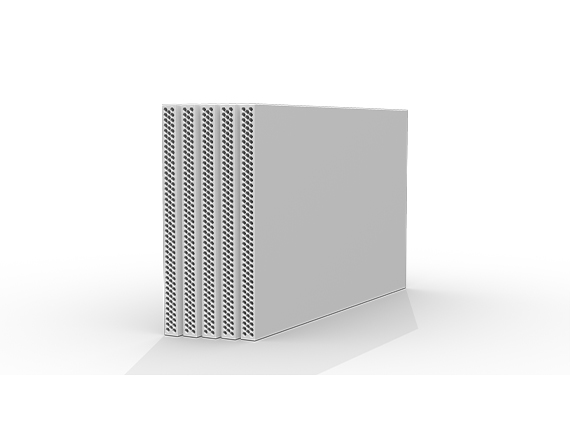
18 mm Industrial Polymer Formwork Panel (PP)
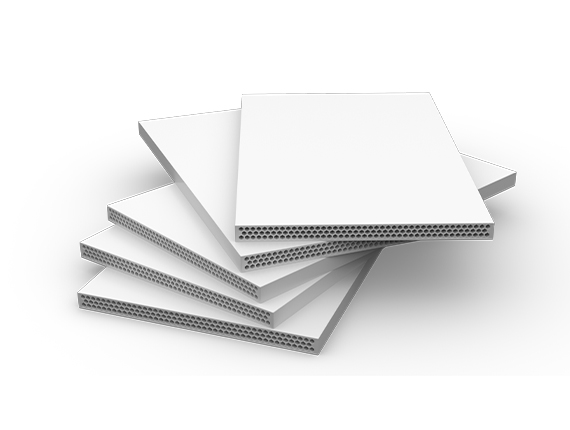
21 mm Heavy-Duty Polymer Formwork Panel (PP)
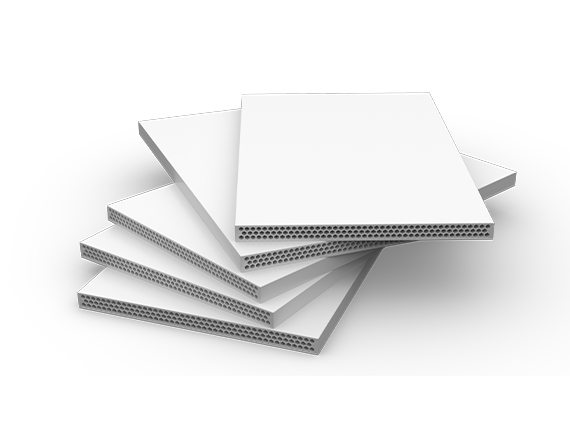
15 mm Industrial Polymer Formwork Panel (PP)
Frequently Asked Questions
Technical guidance on lateral pressure, tie-rod sleeves, stripping, and polymer board life in wall casting.
Frequently Asked Questions
Common questions regarding board selection, reuse cycles, technical parameters, and global delivery.
Yes, when the framing is engineered for the concrete pour rate and lateral hydrostatic pressure, they perform exceptionally in wall and column panels.
Inquire about the exact test conditions, framing support, concrete mix, and jobsite handling practices. Any figure should be corroborated with real site records and laboratory testing rather than arbitrary claims.
The polymer name alone is not a sufficient selection criterion. Internal cross-section (solid, honeycomb, or fluted), weight, test certificates, jobsite temperature ranges, and pricing must all be evaluated together.
Yes, they can be easily cut using standard circular saws or hand woodworking tools. Using a blade with appropriate teeth ensures clean, burr-free edges.
Yes, standard framing nails, screws, and formwork clamp fixings can be applied. The polymer structure grips fasteners securely and does not splinter, split, or delaminate after repeated fastening.
Yes, surface gouges, deep scratches, or accidental drill holes can be easily repaired using hot-air polymer welding, welding rods, or polyurethane plugs, restoring a flush surface.
Other Concrete Formwork Engineering Guides
Explore panel selection, beam spacing, and deflection criteria for other structural elements.
Column Formwork
Under fast pouring rates and heavy vibration, polymer boards ensure crisp column lines, sharp corner definition with PVC chamfers, and smooth plaster-free vertical surfaces.
Fair-Faced Concrete
When architectural designs require uniform texture without timber grain, discoloration, or patch marks, SerPlywood produces a marble-smooth fair-faced concrete finish that eliminates plastering entirely.
Slab Formwork
In wide-span slabs, flat slabs, hollow-block and waffle systems, SerPlywood polymer boards maximize jobsite efficiency with zero water absorption, lightweight ergonomics (10.24 kg/m²), and 40-60+ reusable pour cycles.
Precast Elements
In precast factories and casting yards, polymer boards endure continuous steam curing (+65°C) and high-frequency vibration tables, providing 3 to 4 times longer lifespan than film-faced plywood.